 StoryOps
Product evidence
What does StoryOps find?
See the real product, not a mockup — every screenshot here is a genuine capture, and every claim is one you can check for yourself.
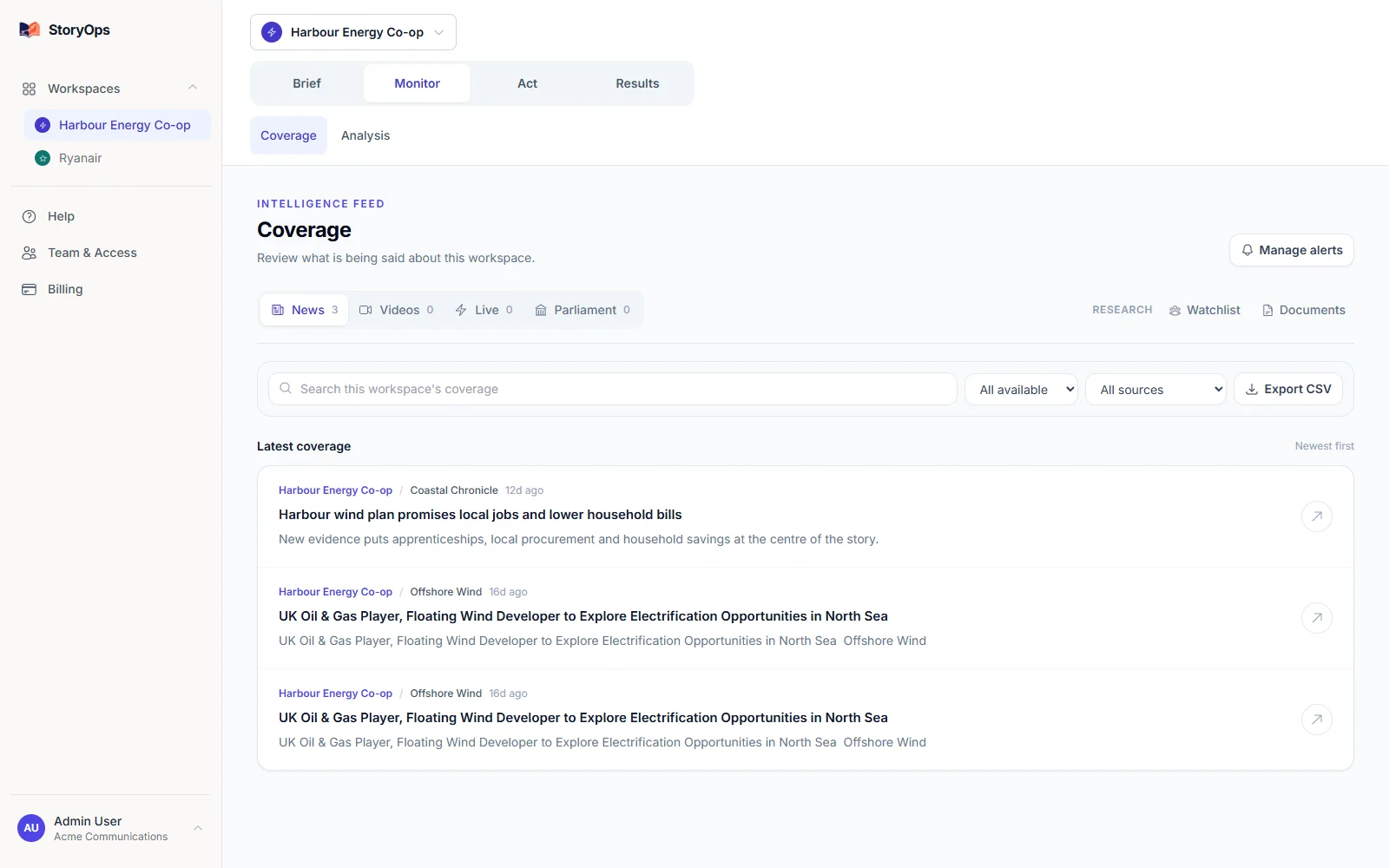
The interface is real. This dataset is a demo.
Every screenshot on this site is a real capture from StoryOps, taken 19 September 2026. Harbour Energy Co-op is a fictional organisation we built to show the interface clearly — treat these as a tour of the product, not a customer result.
Inside a StoryOps report
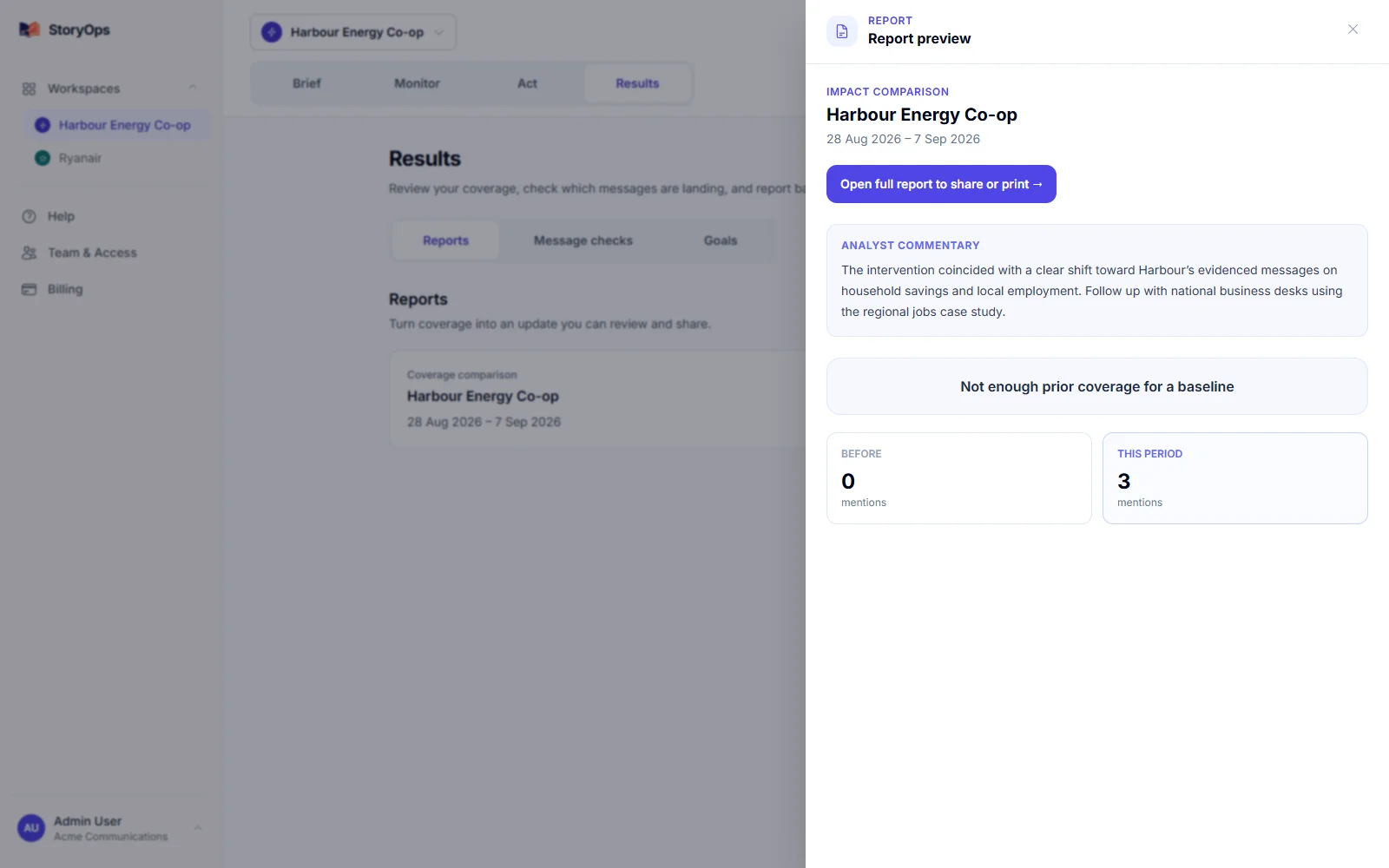
This is a saved report from the product, covering 28 August to 7 September 2026. It has three mentions, and it says so plainly when there isn’t enough prior coverage to set a baseline — that’s the AI being honest about its own limits.
It’s a demo dataset rather than a 24-hour live result, but the format, the honesty about gaps, and the source links are exactly what you’d get on your own coverage.
Five checks for judging any monitoring result
- Scope: note the organisation, its aliases, any exclusions and the sources that were actually configured.
- Window: confirm the start, end and time zone, and check whether you’re looking at publication time or collection time.
- Evidence: open the original URL behind every headline — publisher and timestamp included.
- Review: flag duplicates or irrelevant matches, note anything you know was missed, and ask how the totals were actually calculated.
- Limits: list what wasn’t available to monitor, and keep the AI’s interpretation clearly separate from the evidence underneath it.
See exactly what’s covered.
Source availability depends on what you configure and the access each source allows — confirm your specific outlets before you switch, it only takes minutes.
What’s covered
News and RSS feeds, web coverage, X, Reddit, Bluesky, Lemmy, YouTube and TikTok — plus review sites and Irish or UK parliamentary records where you configure them.
Every coverage report links back to its original source, and report types can carry different kinds of evidence.
What’s out of scope
LinkedIn and Substack aren’t native sources yet, and StoryOps doesn’t include licensed print, TV or radio clips — pair it with a clipping service if your reporting needs those.
It’s built for monitoring, analysis and response, not as a journalist database or press-distribution tool — and every AI finding is there for your team to check, not to publish unreviewed.
See your own coverage today.
Add the one organisation you know best, free. Check the sources yourself, and see if the briefing is one you’d actually send.